GTIPA: Global Trade and Innovation Policy Alliance

About the project

As part of its activities within the Development Program under the Trade and Innovation sub-program, CRPM, as a leading think tank from the Western Balkans and South-East Europe, is working to bring global knowledge, baseline studies and expertise to Macedonia. CRPM is a member of the Global Trade and Innovation Policy Alliance (GTIPA), a global network of think tanks that collaborate to develop and promote policy solutions supporting greater trade liberalization and integration. Through GTIPA, CRPM engages in discussions on impactful policies such as Industry 4.0, digitalization, AI, and innovative global trade policies, while learning from leading practitioners in the field. CRPM’s recent activities with GTIPA include participating in global summits in South Korea and India, and looking forward to exploring new topics at the 2025 summit in Buenos Aires.

CRPM is also working on publishing and producing academic policy briefs in cooperation with respected partners from Europe and the rest of the world.

Project's contribution

Building a collaborative think tank to develop and promote policy solutions supporting greater trade liberalization and integration.

Key activities

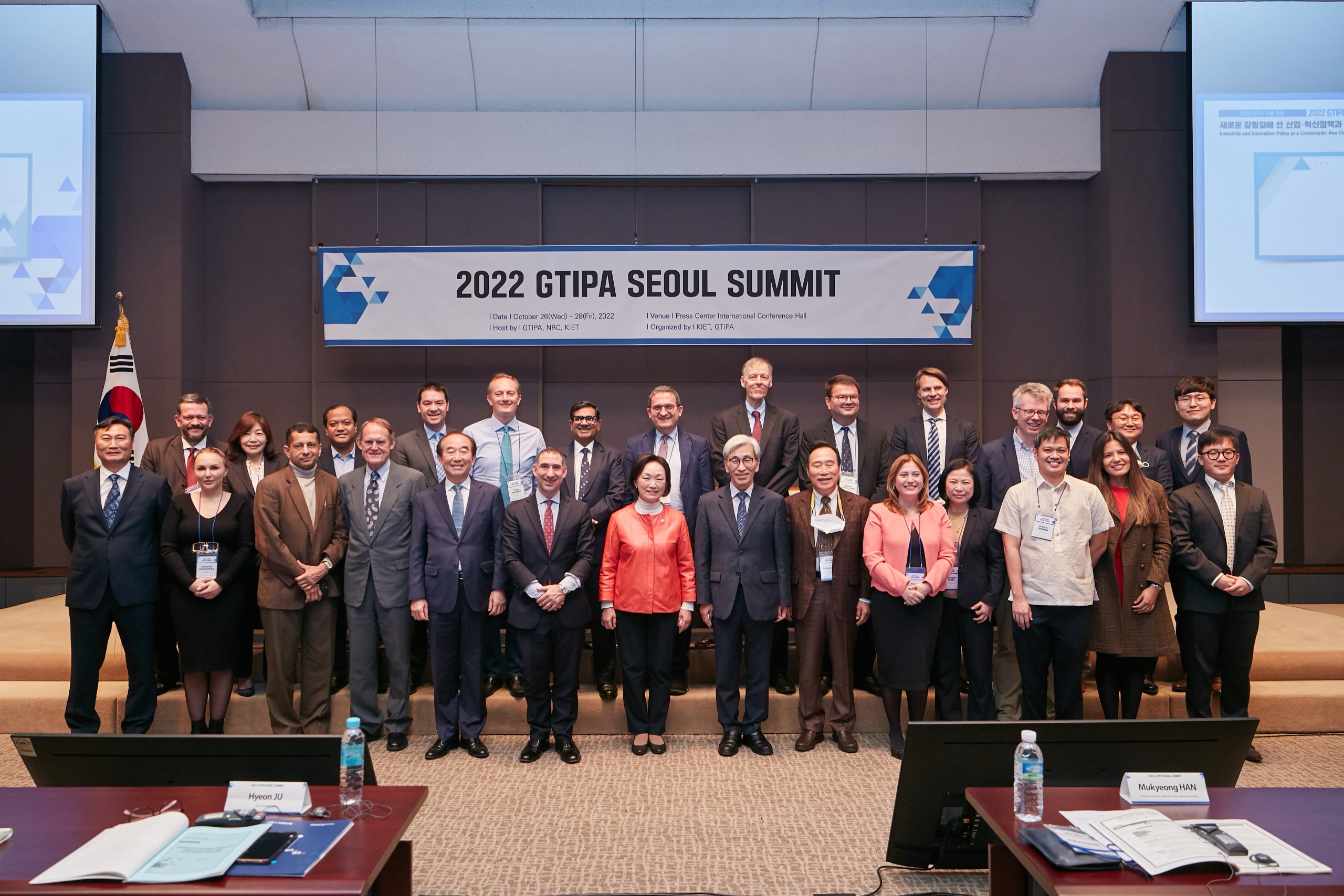
The GTIPA summit in South Korea, held in October 2022, served as a platform for exchange between experts on trade, globalization, innovation, and intellectual property policy, as well as leaders from South Korea’s business, academic, and policy-making communities. The summit cantered on strengthening strategic alliances and addressing global challenges in an increasingly interconnected world. Discussions focused on enhancing cooperation between South Korea and GTIPA member countries, particularly in the realms of industrial and innovation policies. Members presented research on how strategic alliances could be leveraged to overcome economic challenges and foster mutual growth.

A significant part of the summit was dedicated to the issue of clean energy, with participants discussing the urgent need for economies to transition to environmentally friendly systems. Research on affordable renewable energy solutions was presented as a crucial element for achieving a successful green transition.

Another key topic was Korea’s innovation and entrepreneurship environment. The summit featured presentations by startup CEOs who shared insights into the strengths and weaknesses of the local startup ecosystem. This led to an open discussion on fostering innovation and improving the entrepreneurial landscape.

Finally, the summit addressed the broader challenges posed by the Great Transition—a shift toward more sustainable and digital economies. GTIPA members discussed the need for recalibrating industrial, innovation, and trade policies to navigate this transition, offering policy recommendations to address emerging challenges and opportunities.

CRPM participated with its representatives on this summit.

In the publication Strengthening Global Cooperation for Industrial Innovation in the Era of the Great Transition, issued by the National Research Council for Economics, Humanities and Social Sciences, the Center for Research and Policy Making (CRPM) contributed a paper that explores the relationship between Macedonia and South Korea. The paper provides an overview of the economic and trade linkages between the two countries, emphasizing the potential to strengthen and deepen their strategic alliances and trade relations, particularly through Korean investments in the clean energy and AI sectors.

The first section of the paper outlines the reasons behind the growing interest in deepening ties between Macedonia and South Korea. It then proceeds with a detailed analysis of trade between the two nations, examining both the trade volumes and sectoral breakdowns.

The paper also highlights strategic opportunities for South Korea to further its economic presence in Southeast Europe. It proposes that investments in Macedonia’s clean energy and AI sectors could serve as a pathway for South Korea’s broader expansion in the region. The analysis underscores the mutual benefits of such investments and the potential for fostering stronger economic ties.

The paper concludes by summarizing the key findings and recommendations, offering insights into how these investments could serve as a catalyst for deeper cooperation between Macedonia and South Korea, contributing to regional growth and innovation.

In 2023, the GTIPA Summit held in Berlin with support by the German Economic Institute. CRPM participated actively on the panels and discussions emphasizing the importance for the SEE countries to undertake policies that will bolster innovation and drive economic growth. One of the topics discussed by CRPM was investing in education and skill development, recognizing the region’s strong technical education institutions and the higher representation of women in STEM, which can help retain young talent and reduce emigration. What is also needed is support in building culture of innovation, particular in countries with historical ties to the post-Soviet systems.

As part of the “State of Play” series on Poland’s economic cooperation with non-EU countries, CRPM, in collaboration with the Warsaw Enterprise Institute, contributed to a comprehensive policy paper exploring the potential for Polish companies to expand in Macedonia. The publication offers a detailed analysis of the Macedonian economy, highlighting its unique characteristics, current economic relations between the two nations, and the most promising sectors for cooperation.

The paper delves into opportunities for Polish businesses to advance their activities in Macedonia, identifying key areas for expansion and emphasizing the importance of institutional support from the host country. It provides valuable insights from both Macedonian and Polish perspectives, with Macedonian authors offering an in-depth look at the states. This collaborative effort aims to identify pathways for deeper economic ties and mutual growth between Poland and Macedonia.

CRPM participated in the GTIPA Summit held in India in November 2024. This year’s summit focused on India’s emergence as a global innovation hub, highlighting topics such as the future of semiconductors, sustainable development, women entrepreneurship, innovation in life sciences and healthcare delivery, and intellectual property policies.

A key theme of the summit was India’s journey toward becoming an economic power and the importance of fostering open collaboration, innovation, and creating employment opportunities for its growing workforce. Discussions emphasized how technological advancements are essential for driving sustainable growth and how strategic investments in sectors such as semiconductors, artificial intelligence, and renewable energy can position India as a global leader. The summit underscored the need for policies that encourage technology adoption and global competition to foster innovation and development.

One of the standout sessions explored the future of semiconductors and India’s increasing significance in the global semiconductor industry. Speakers from the country examined the strengths in design capabilities and its challenges in establishing local production facilities. Recent initiatives, such as the India Semiconductor Mission, aim to address these gaps by building fabrication facilities and creating a robust supply ecosystem. The discussion also highlighted India’s potential to become a global semiconductor hub by leveraging its talent pool and strategic investments in research, development, and specialized training.

Another session provided insights on innovation systems, with discussions centred around essential components such as capital, talent, and knowledge. Participants emphasized the transformative power of innovation and the importance of building capacities to adapt to evolving challenges. The conversations also touched upon artificial intelligence, exploring its potential and the regulatory approaches needed to maximize its value while addressing ethical and governance concerns. The GTIPA Summit 2024 showcased India’s strides in technology and innovation, offering a platform for meaningful dialogue on global challenges and opportunities. CRPM’s involvement reflects its commitment to engaging in forward-thinking discussions that promote collaboration and drive progress in innovation and economic development.

CRPM participated in the GTIPA “South Meets North” Summit, held in Buenos Aires, Argentina, in September 2025. Bringing together leading thinkers and policymakers from more than 50 think tanks across 30 countries, this year’s summit focused on global innovation systems and policies, exploring how innovation, trade, smart regulation, and technological transformation can contribute to greater competitiveness and sustainable economic growth. CRPM was represented by its Executive Directress, Marija Risteska.

A key theme of the summit was the relationship between regulation, innovation, and economic competitiveness. Discussions examined how countries can create regulatory environments that protect consumers and workers while allowing innovative businesses and emerging technologies to develop. Particular attention was given to smart deregulation, digital businesses, artificial intelligence governance, labour protections in the platform economy, and the broader impact of regulatory frameworks on technological development.

The summit also highlighted Argentina’s rapidly evolving innovation ecosystem and its experience in areas such as FinTech, AgTech, life sciences, nuclear energy, and the lithium-driven energy transition. Participants had the opportunity to learn directly from two of Argentina’s leading technology companies, Mercado Libre and Globant, whose development demonstrates the potential of digital innovation to transform industries, expand access to services, and create new opportunities for businesses and individuals.

Another important part of the discussions focused on the international dimension of innovation policy. Participants examined the influence of regulatory models such as the so-called “Brussels Effect,” including the impact of European rules on data protection and artificial intelligence beyond the EU. Experiences from different countries demonstrated the importance of finding the right balance between regulation and openness to innovation, while ensuring that infrastructure, education, and skills development keep pace with technological change.

The summit concluded by emphasizing the need for countries to continuously assess their regulatory frameworks, strengthen education systems for the digital economy, and equip citizens with the skills necessary to benefit from artificial intelligence and other emerging technologies. CRPM’s participation in the GTIPA Summit reflects its continued commitment to engaging in global policy dialogue, exchanging experiences with international partners, and contributing perspectives from Macedonia to discussions on innovation, competitiveness, and economic development.

Together with the partners from the Global Trade and Innovation Policy Alliance (GTIPA), the Center for Research and Policy Making is actively contributing to international research examining innovation, competitiveness, and economic development at the subnational level. This work includes CRPM’s participation in the development of the Balkan Subnational Innovation Competitiveness Index and the development of the Transatlantic Subnational Innovation Competitiveness Index 3.0.

Published in May 2026, the Balkan Subnational Innovation Competitiveness Index was developed by researchers from the Information Technology and Innovation Foundation (ITIF) and CRPM, including CRPM’s Executive Directress Marija Risteska and researcher Goran Miladinov. The Index provides one of the most comprehensive comparative assessments of innovation competitiveness at the subnational level in the Western Balkans, benchmarking 48 regions across Albania, Bosnia and Herzegovina, North Macedonia, and Serbia.

Rather than assessing countries only through national averages, the Index examines the considerable differences that exist between regions within individual economies. It evaluates regional performance through 13 indicators grouped around three broad dimensions: the knowledge economy, globalization, and innovation capacity. These include educational attainment, skilled immigration, professional and scientific employment, manufacturing productivity, high-tech exports, foreign direct investment, broadband adoption, research and development, patent activity, business creation, carbon efficiency, and venture capital.

The findings demonstrate both the innovation potential of the Western Balkans and the substantial disparities between individual regions. Skopje ranked third among all 48 regions included in the Index, while North Macedonia’s Southeastern region ranked eighth. At the same time, the research points to the need for stronger investment in research and development, closer links between public and private innovation institutions, and more territorially focused innovation policies capable of addressing the gap between capital cities and peripheral regions.

Building on this experience, CRPM is also contributing to the development of the Transatlantic Subnational Innovation Competitiveness Index 3.0, continuing a series of international comparative studies developed through the GTIPA network. Previous editions of the Transatlantic Index have compared innovation ecosystems across European and North American regions, providing policymakers with a tool to identify comparative advantages, structural weaknesses, and opportunities for strengthening regional competitiveness. The 2.0 edition benchmarked 121 regions across Austria, Germany, Hungary, Italy, Poland, Sweden, and the United States, examining their performance across knowledge economy, globalization, and innovation capacity indicators.

CRPM’s involvement in the development of these indexes strengthens the representation of Macedonia and the Western Balkans in international research on innovation and competitiveness, while also connecting regional policy debates with experiences from advanced innovation ecosystems in Europe and North America. Through comparative data and evidence-based analysis, this work enables policymakers to look beyond national-level indicators and better understand the specific strengths and challenges of individual regions.

Participation in these international research initiatives reflects CRPM’s broader commitment to developing evidence-based policies for innovation, technological development, competitiveness, and sustainable economic growth. By contributing both regional expertise and research capacity to the GTIPA network, CRPM continues to connect policy development in the Western Balkans with global debates on how regions can build stronger, more innovative, and internationally competitive economies.
Read more