
Istanbul, Türkiye | 5–7 November 2026
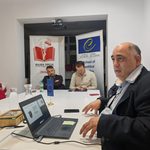
Marija Risteska, representing the Centre for Research and Policy Making (CRPM) and the Gender Budget Watchdog Network (GBWN), contributed to an international discussion on the economic dimensions of disaster risk reduction, advocating for stronger prevention financing, gender-responsive public budgets and more inclusive access to financial resources.
The contribution took place during the international convening “Reimagining Resilience: Collective Futures for Disaster Risk Reduction – From Risk to Justice and Collective Survival,” held in Istanbul from 5 to 7 November 2026.
The convening was organised by a coalition including the Women’s Environment and Development Organization (WEDO), ActionAid International, the United Nations Office for Disaster Risk Reduction (UNDRR), UN Women, Oxfam KEDV, AWID and other international partners, on behalf of the Women and Gender Stakeholder Group of UNDRR.
The event brought together women’s rights advocates, civil society organisations, researchers and practitioners to examine how existing disaster risk reduction systems can be transformed to address structural inequalities and strengthen women’s leadership in resilience planning.
Putting gender at the centre of disaster financing
On 6 November, Marija Risteska contributed to Learning Lab 7: Economic Dimensions of Disaster Risk Reduction, which explored how disaster financing mechanisms, public budgets and financial institutions can better respond to the needs of women and marginalised communities.
Drawing on CRPM’s regional research and the work of the Gender Budget Watchdog Network, which brings together more than 100 civil society organisations, Risteska presented two interconnected lessons.
Lesson 1: Allocating money is not the same as preventing disasters
Risteska presented findings from CRPM’s examination of disaster risk reduction budgets in municipalities in Macedonia’s Polog region, an area particularly exposed to flooding.
The research demonstrated a significant gap between formal budget allocations and actual prevention measures.
While municipalities complied with requirements to allocate 3% of their budgets to disaster risk response, the planned interventions were not gender-responsive. Moreover, funds intended for prevention and preparedness frequently remained unspent or were reallocated when no disaster occurred.
The analysis identified weaknesses in municipal planning, limited coordination between crisis management and gender equality structures, and insufficient alignment between budget programmes, activities and accounting codes.
As Risteska emphasised: “We had money in the budget, but not necessarily money protecting people.”
Building on these findings, CRPM proposed that municipalities dedicate at least 30% of disaster risk reduction budgets to prevention and preparedness, supported by specific budget lines, measurable activities, public reporting and safeguards ensuring that these resources are actually spent for their intended purpose.
The proposal seeks to shift the focus from reactive disaster spending towards institutionalised and accountable prevention financing.
Lesson 2: What financial systems do not measure, they cannot adequately finance
The second lesson addressed women’s unequal access to financial resources and the implications for disaster recovery.
Drawing on the implementation of the WE Finance Code in the Western Balkans, Risteska presented evidence of persistent inequalities in business lending. In Macedonia, women-owned businesses accounted for only 7.5% of the total value of business loans in the analysed data. In Montenegro, the average approved loan for women-owned micro, small and medium-sized enterprises was approximately €92,000, compared with €173,000 for other MSMEs.
These inequalities are particularly relevant in disaster contexts, where access to recovery loans, insurance and guarantees frequently depends on formal business registration, collateral and property ownership. Women working in informal agriculture, operating home-based businesses or providing unpaid care may experience substantial livelihood losses without possessing the formal assets required to qualify for financial support.
As development financing increasingly shifts from grants to loans and guarantees, these challenges risk creating additional debt burdens for women rather than supporting their recovery.
The central message was clear: financial data, eligibility criteria and disaster financing triggers must reflect people’s actual vulnerabilities, not simply the assets that financial institutions can measure.
From financial resilience to financial justice
The experience of the Gender Budget Watchdog Network demonstrates how civil society monitoring, gender-responsive budgeting and cooperation with public institutions can support more equitable and accountable resource allocation.