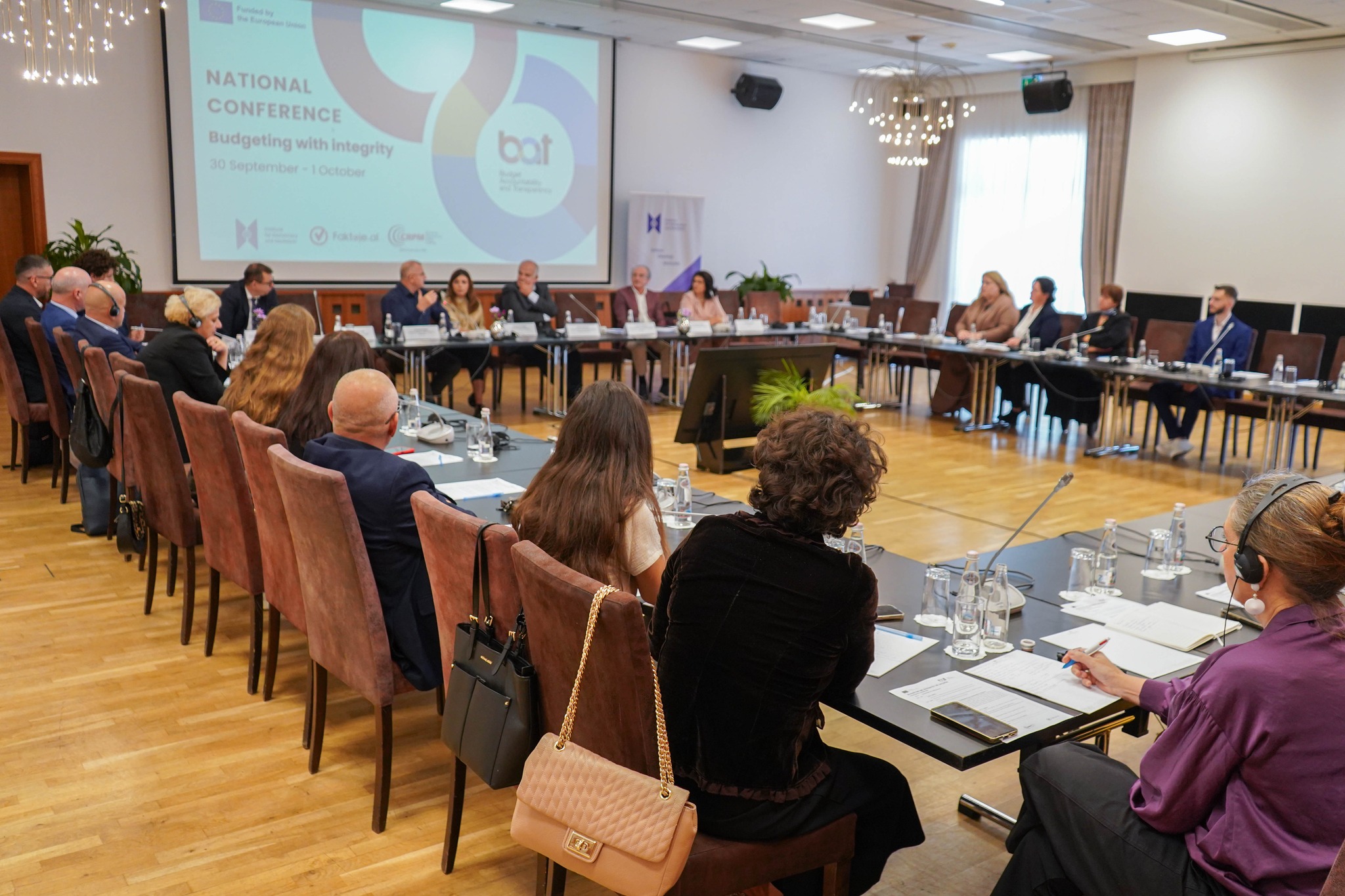
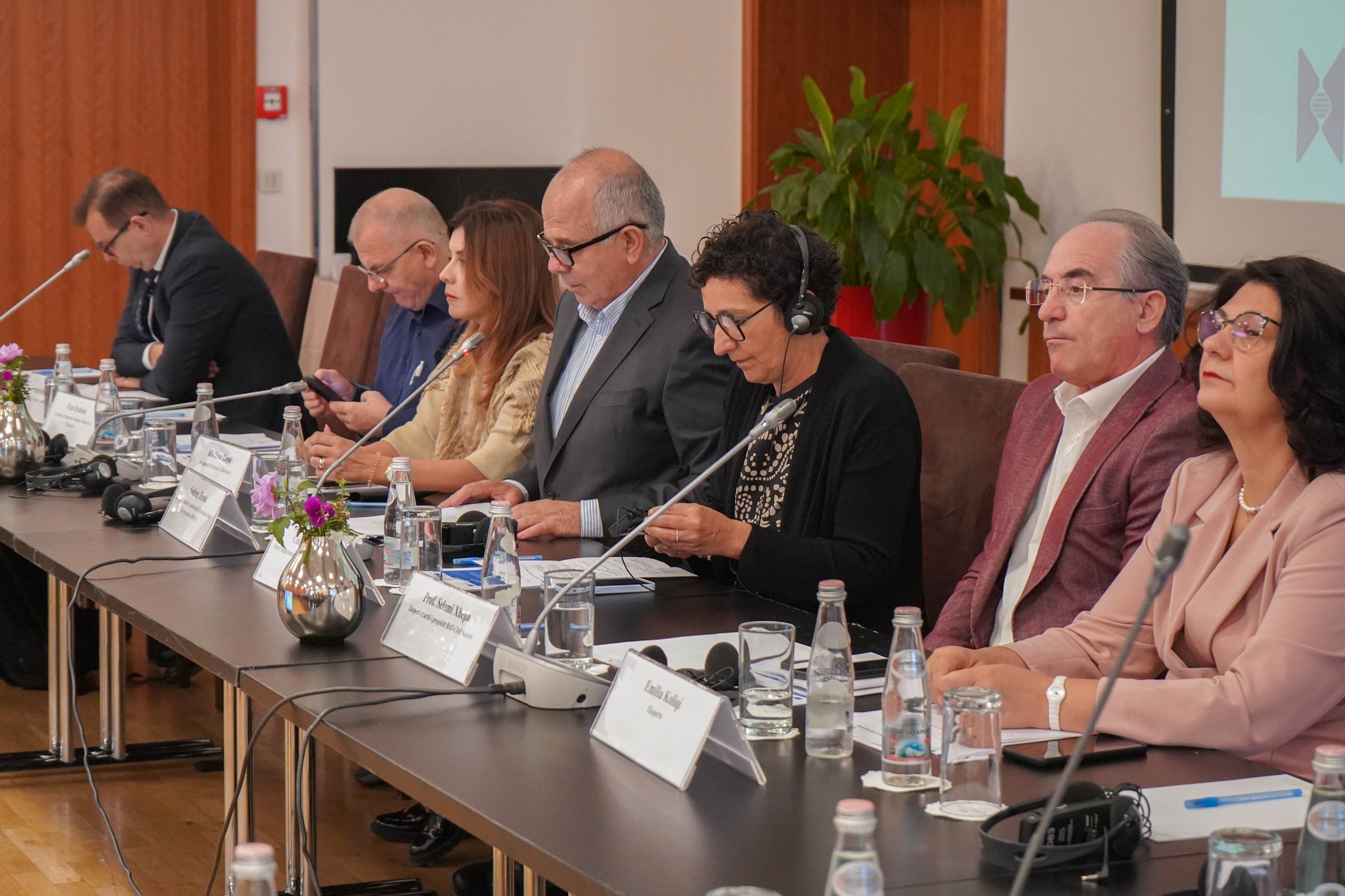
The Centre for Research and Policy Making (CRPM) participated as a key partner at the national conference “Budgeting with Integrity”, held in Tirana, Albania, from September 30 to October 1, 2025. Organized within the framework of the EU-funded project “Civic Oversight Capacities for Budget Accountability and Transparency” (BAT), the event marked the conclusion of a two-year initiative led by the Institute for Democracy and Mediation (IDM), with Faktoje Centre and CRPM as partners.
The conference gathered representatives from public institutions, civil society organizations, universities, the media, and engaged citizens to reflect on current practices, review achievements, and address the challenges that remain in advancing more transparent, inclusive, and responsive public finances. Key themes included budgeting for environmental and climate goals, strengthening gender-responsive budgeting, enhancing the role of civil society in oversight, and supporting the work of independent accountability institutions.
CRPM’s Role: Strengthening Civic Oversight through Gender Budget Watchdogging
As part of the BAT project, 15 civil society organizations in Albania developed policy research papers on public finance issues. CRPM’s role as a partner was to guide these organizations throughout the process of data collection, analysis, and presentation. By applying its flagship Gender Budget Watchdog model, CRPM helped strengthen the capacity of CSOs to monitor and advocate for gender-responsive and equitable budgeting.
This model has been instrumental in building stronger oversight capacities across the Western Balkans and beyond, ensuring that public funds are managed transparently and in a way that reflects the needs of all citizens.
CRPM on Stage: Moderating a Session on Gender-Responsive Budgeting
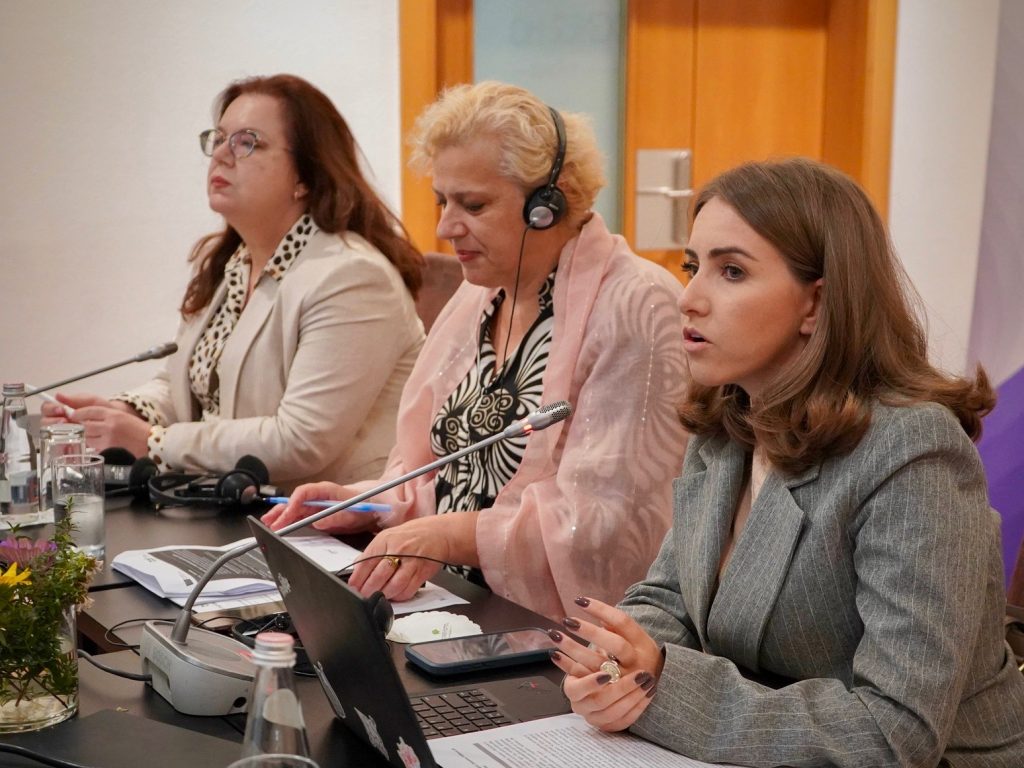
At the closing conference, our Gender and Climate Expert, Gordana M. Nestorovska represented CRPM and moderated the dedicated session on gender-responsive budgeting (GRB) in Albania. The session featured a presentation by Prof. Nadja Rusi, and commentary by Ms. Etleva Sheshi from the Directorate for Gender Equality within the Ministry of Health and Social Protection of Albania, who outlined the government’s commitments to advancing GRB at both local and national levels.
The discussions emphasized that while Albania has a strong legal framework for gender-responsive budgeting, implementation remains incomplete. Beyond political commitment, there is a clear need for additional training, standardized procedures, and stronger institutional collaboration to ensure systematic integration of gender perspectives into budgeting. Panelists also stressed the importance of expanding GRB practices beyond traditional sectors like education, social policy, and employment to critical areas such as climate change and environmental policy.
Moving Forward: Opening Budgets to Citizens
The two-day conference closed with panels exploring the role of independent institutions and civil society actors in strengthening budget integrity. The overarching message was clear: budget processes must be opened wider to citizens and CSOs to ensure public spending realistically reflects people’s needs and priorities.
The BAT project, financed by the European Union, sought to empower CSOs, activists, young researchers, and journalists with the tools and resources to engage in budget oversight. Through training, sub-grants, and knowledge-sharing, the project contributed to better policies, stronger accountability, and more inclusive governance.